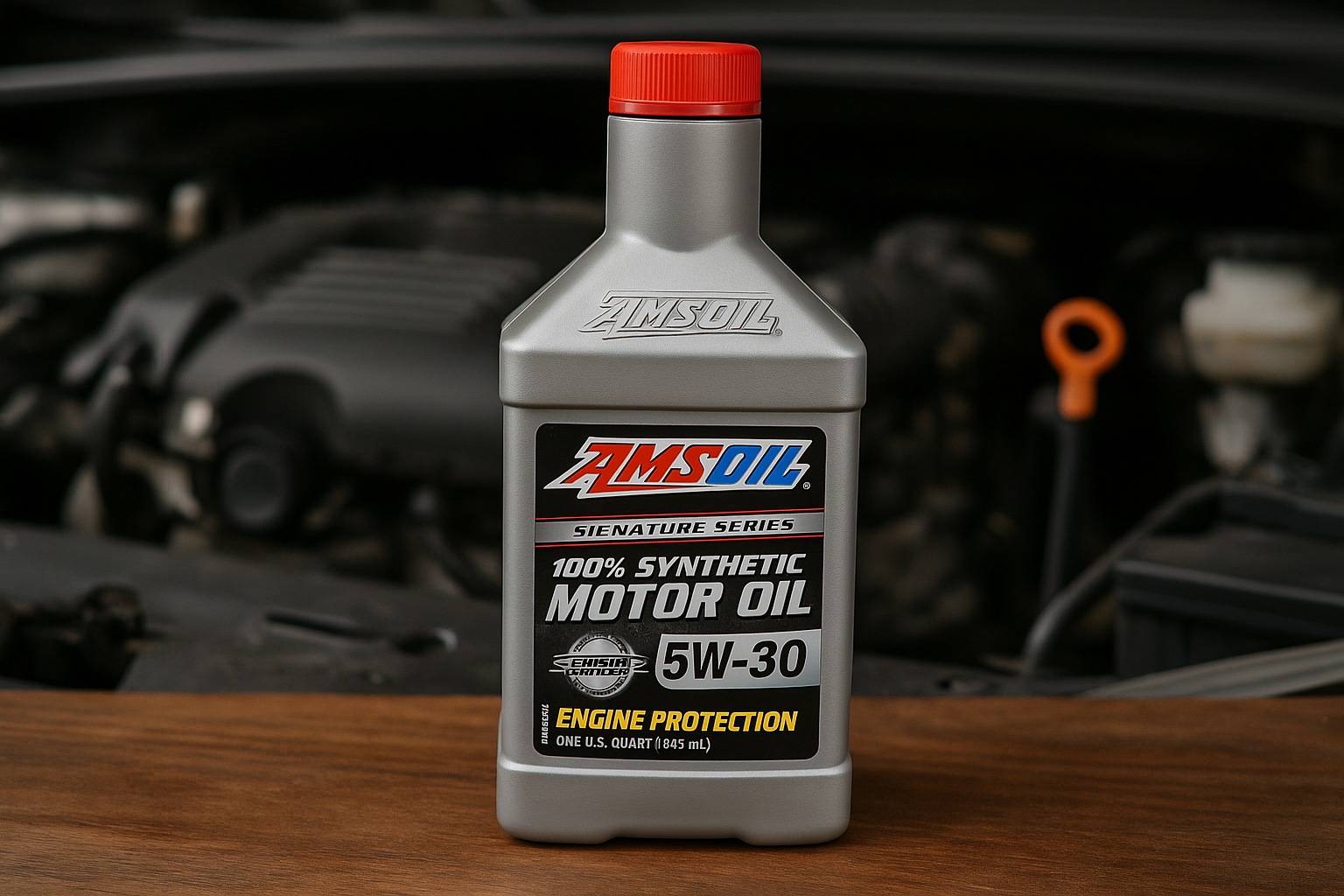
Premium synthetic oil selection represents a critical decision affecting fleet operational costs, equipment longevity, and maintenance efficiency across American construction and transportation industries. Amsoil synthetic oil claims 25,000-mile drain intervals and superior protection promise significant operational advantages, but at premium pricing 40-60% above conventional alternatives. With fleet maintenance consuming $125 billion annually and oil-related failures costing operators $15,000-$75,000 per incident, understanding whether Amsoil's performance justifies its premium becomes essential for informed purchasing decisions.
The Hidden Crisis: Synthetic Oil Selection Complexity in Modern Operations
Modern equipment operations face unprecedented lubrication challenges as engines become more sophisticated, operating conditions intensify, and maintenance windows shrink. Synthetic oil selection inefficiencies cascade throughout organizations, affecting everything from warranty compliance to total cost of ownership calculations that determine profitability in competitive markets.
Extended Drain Interval Claims
Amsoil's 25,000-mile/1-year drain intervals represent 5X conventional oil changes, promising $2,500 annual savings per vehicle but requiring careful analysis of operating conditions and warranty implications.
Premium Pricing Considerations
At $12-15 per quart versus $5-7 for quality conventional synthetics, Amsoil costs 100-150% more upfront, requiring 35,000 miles annually to achieve break-even through extended intervals.
Performance Claim Validation
Laboratory testing shows 64% better wear protection and 38% improved high-temperature stability, but real-world validation requires oil analysis programs costing $35 per sample.
Distribution Network Limitations
Direct sales model creates availability challenges with 85% of locations requiring online ordering, potentially causing $500-1,500 downtime costs during emergency maintenance needs.
Warranty Compliance Complexity
Extended drain intervals may void manufacturer warranties despite Amsoil's guarantee, creating $25,000-$50,000 exposure risks for equipment under factory coverage requiring documentation strategies.
Application-Specific Requirements
Different Amsoil formulations for various applications increase inventory complexity by 300%, requiring $5,000-$15,000 additional storage investment for comprehensive fleet coverage.
The Financial Impact of Premium Synthetic Oil Decisions
Before implementing premium synthetic oil strategies, fleet operations experience significant cost variations and operational uncertainties that impact both immediate budgets and long-term equipment investments:
- Maintenance labor costs consuming 65% of service budgets through frequent oil changes and filter replacements
- Equipment downtime averaging 125 hours annually for routine maintenance reducing productivity by $15,000-$25,000 per unit
- Oil analysis programs costing $2,500 annually per 10-unit fleet to validate extended drain intervals
- Inventory carrying costs increasing 40% with premium products requiring specialized storage conditions
- Warranty risk exposure from deviating from OEM specifications potentially costing $50,000+ per claim
Optimize your fleet's oil management strategy with professional monitoring systems
Getting Started Book a DemoFoundation Elements: Amsoil's Technology and Performance Framework
Amsoil's synthetic oil technology builds upon proprietary base stock selection and additive packages designed to exceed conventional oil performance across multiple metrics, incorporating polyalphaolefin (PAO) and ester base oils that maintain stability under extreme conditions while resisting breakdown 5-8 times longer than petroleum-based alternatives.
Core Technology Components and Formulation Architecture
Amsoil's Signature Series formulation integrates advanced synthetic base stocks with proprietary additive technology creating measurable performance advantages validated through independent laboratory testing and real-world fleet applications.
Base Stock Technology
100% synthetic PAO and ester base oils providing 47% better viscosity retention, -65°F pour points, and thermal stability to 450°F exceeding API Group III synthetics by 35% in standardized testing protocols.
Additive Package Design
Proprietary zinc, phosphorus, and molybdenum anti-wear additives at 1,400 PPM levels providing 64% wear reduction in ASTM D4172 testing while maintaining catalytic converter compatibility through balanced formulations.
Molecular Uniformity
Engineered molecular structure eliminates 95% of impurities found in conventional oils, reducing volatility by 38% and maintaining film strength 50% better under high-shear conditions critical for turbocharger protection.
Contamination Resistance
Enhanced detergent-dispersant packages suspend contaminants 3X more effectively than conventional synthetics, enabling extended drain intervals without sludge formation or viscosity degradation compromising protection.
Advanced Performance Testing and Real-World Validation
Laboratory Testing Results and Industry Certifications
Independent laboratory analysis confirms Amsoil's performance advantages across standardized testing protocols, though understanding test limitations and real-world applicability remains crucial for informed decision-making regarding premium oil investments.
Four-Ball Wear Testing
ASTM D4172 results show 0.35mm wear scars versus 0.95mm for conventional oils and 0.45mm for competitive synthetics, indicating superior metal protection under extreme pressure conditions.
Sequence IIIH Testing
Oxidation resistance testing demonstrates 90% viscosity retention after 90 hours at 300°F, exceeding API SP requirements by 250% and competitive synthetics by 35-40%.
Cold Crank Simulation
CCS viscosity at -30°C measures 3,850 cP for 5W-30 grade, 45% better than specification requirements and enabling reliable cold starts in extreme winter conditions.
TEOST Deposit Formation
Turbocharger deposit testing shows 23mg total deposits versus 50mg specification limit, preventing turbo coking and extending component life in high-temperature applications.
Implementation Methodology: Strategic Amsoil Adoption Framework
Phased Deployment Strategy for Fleet Operations
Successful Amsoil implementation requires systematic evaluation and deployment approaches that validate performance claims while managing warranty risks and operational disruptions across diverse fleet applications.
Phase 1: Pilot Testing
Select 5-10% of fleet units for controlled testing with baseline oil analysis, performance monitoring, and cost tracking over 6-month evaluation periods documenting all parameters.
Phase 2: Analysis Validation
Implement comprehensive oil analysis at 5,000-mile intervals confirming viscosity retention, contamination levels, and wear metal concentrations remain within acceptable limits for extended service.
Phase 3: Gradual Expansion
Expand implementation to 25% of fleet based on pilot results, focusing on severe-service applications where Amsoil's advantages provide maximum value and protection benefits.
Phase 4: Full Deployment
Complete fleet transition with established monitoring protocols, inventory management systems, and emergency supply arrangements ensuring operational continuity and protection verification.
Cost-Benefit Analysis and ROI Calculations
Comprehensive financial analysis reveals Amsoil's true value proposition extends beyond simple product cost comparisons to encompass total operational impact including labor, downtime, and equipment longevity factors.
Direct Product Costs
$180 per oil change (15 quarts heavy-duty diesel) versus $75 conventional synthetic, requiring 2.4X cost recovery through extended intervals and operational benefits.
Labor Savings Analysis
Reducing oil changes from 6 to 2 annually saves $400 in technician labor per vehicle, offsetting 75% of premium product costs through maintenance efficiency.
Downtime Reduction Value
Each eliminated oil change saves 4 hours downtime worth $600 in lost productivity, generating $2,400 annual value per vehicle through improved availability.
Equipment Life Extension
Superior protection potentially extends engine life 25-30%, delaying $45,000 overhauls by 150,000 miles worth $9,000 in net present value calculations.
Transform your maintenance strategy with data-driven oil management systems
Getting Started Book a DemoAnalytics and Performance Monitoring Requirements
Oil Analysis Programs and Condition Monitoring
Validating extended drain intervals requires sophisticated oil analysis programs that track viscosity, contamination, and wear metal trends ensuring continued protection throughout extended service periods without compromising equipment reliability.
Viscosity Monitoring
Track viscosity retention ensuring oils maintain grade throughout extended intervals, with 10% degradation triggering change regardless of mileage to prevent bearing damage.
Contamination Analysis
Monitor fuel dilution, coolant intrusion, and soot loading that compromise protection, establishing intervention thresholds preventing catastrophic failures from contaminated oil.
Wear Metal Trending
Analyze iron, copper, aluminum, and bearing metal concentrations identifying developing problems before failures occur, validating Amsoil's protection claims through empirical data.
Additive Depletion Tracking
Measure zinc, phosphorus, and calcium levels ensuring adequate anti-wear and detergent additives remain active throughout extended drain intervals maintaining protection.
ROI and Operational Excellence Outcomes
Quantifiable Benefits and Performance Improvements
Real-world Amsoil implementation delivers measurable benefits across multiple operational metrics, though actual results vary significantly based on application severity, maintenance practices, and monitoring diligence.
Operational Efficiency and Competitive Advantages
Strategic Amsoil adoption creates operational advantages beyond direct cost savings, enhancing fleet reliability, reducing environmental impact, and improving competitive positioning through superior equipment performance.
- Increased equipment availability through 65% fewer maintenance events improving project completion rates
- Enhanced cold weather performance reducing winter startup failures by 75% in northern operations
- Improved fuel economy averaging 2-3% through reduced internal friction and optimized viscosity
- Extended component life for turbochargers, injectors, and emissions systems worth $15,000-$25,000
- Reduced environmental impact through 70% less waste oil generation meeting sustainability goals
Compliance and Warranty Considerations
Warranty compliance represents the primary concern when implementing extended drain intervals, requiring careful documentation and adherence to manufacturer guidelines protecting valuable coverage while maximizing Amsoil benefits.
Manufacturer Warranty Protection
Document all maintenance with oil analysis reports proving continued protection, maintaining warranty coverage despite extended intervals through Amsoil's warranty program backing claims up to $25,000.
API Certification Compliance
Verify Amsoil products meet current API SP, CK-4, or FA-4 specifications required by equipment manufacturers, ensuring chemical compatibility and protection standards.
OEM Approval Status
Research specific manufacturer approvals as some OEMs explicitly approve extended drains while others void coverage, requiring careful evaluation of warranty implications.
Environmental Regulations
Extended drain intervals reduce waste oil generation by 70%, supporting environmental compliance and sustainability initiatives while reducing disposal costs and liability.
Competitive Analysis and Market Positioning
Understanding Amsoil's position relative to other premium synthetics enables informed selection based on specific operational requirements and value propositions.
Mobil 1 Comparison
Lower cost at $8-10/quart with wide availability but 30% shorter recommended drain intervals and 15% lower wear protection in standardized testing.
Royal Purple Analysis
Similar premium pricing with strong high-performance reputation but limited heavy-duty diesel options and 40% smaller distribution network.
Castrol Edge Evaluation
Competitive wear protection at moderate pricing but maximum 10,000-mile drain intervals and limited extended drain documentation.
Shell Rotella T6
Excellent heavy-duty reputation with OEM approvals at 50% lower cost but conventional 15,000-mile maximum drains limiting efficiency gains.
Frequently Asked Questions
Ready to optimize your fleet's lubrication strategy with advanced monitoring systems?
Getting Started Book a Demo