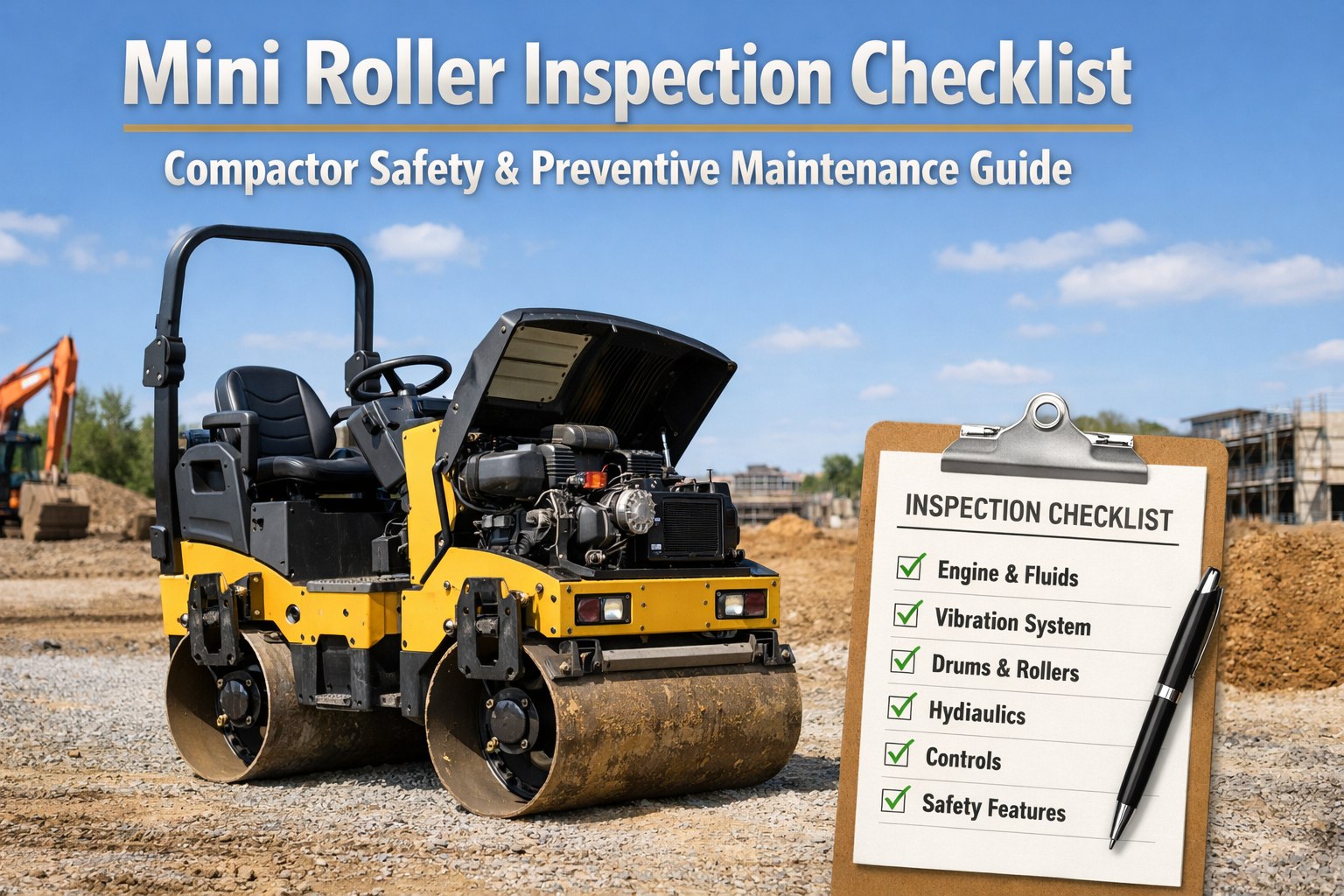
Why Mini Roller Inspections Matter
Operator Safety
- HVI guides maintenance teams through all mini roller inspection requirements covering steering systems, structural components including drums and articulation joints, control systems, cooling systems, and electrical systems—preventing mechanical failures that endanger operators and ground personnel during compaction operations.
Equipment Reliability
- HVI detects hydraulic pump and hose deficiencies, fuel injection problems, lubrication oil filter and cooler failures, engine overheating and blow-by conditions, vibration motor and pump issues, and lubricant condition degradation through structured digital assessments. Photo capture and automatic work order creation identify deficiencies early, maximizing mini roller availability.
Maintenance Compliance
- HVI maintains compliance with mini roller maintenance standards through timestamped digital documentation. Our platform produces audit-ready reports and provides evidence of systematic compactor safety and maintenance inspection management for fleet reviews across all construction and road-building operations.
Cost Control
- HVI prevents minor defects from becoming major failures through automated monitoring of hydraulic filters and hoses, fuel filters and injectors, cooling system water lines, lubrication oil conditions, and general engine performance indicators including oil pressure, exhaust smoke, and fuel consumption. Our platform tracks component condition across the entire roller fleet—lowering maintenance costs through proactive repair and replace notifications.
Ready to digitize your mini roller inspections? Start your free trial now (get started in 10 minutes) or schedule a quick demo to discover how HVI revolutionizes mini roller inspection management.
1. Steering
Steering inspection with HVI software—start your free trial today and digitize inspections immediately.
2. Structure
Structure inspection with HVI software—schedule your personalized demo.
3. Air Intake System
Air intake system inspection with HVI software:
4. Classification of Equipment (Tick appropriate remarks)
Equipment classification with HVI software:
5. Control System
Control system inspection with HVI software:
6. Cooling System
Cooling system inspection with HVI software:
7. Electrical System
Electrical system inspection with HVI software:
8. Fuel Injection System
Fuel injection system inspection with HVI software:
9. General Condition
General condition inspection with HVI software:
10. Hydraulic System
Hydraulic system inspection with HVI software:
11. Lub. Oil System
Lubrication oil system inspection with HVI software:
12. Lubricant Condition
Lubricant condition inspection with HVI software:
Benefits of HVI Inspection Software for Mini Roller Operations
Revolutionize Your Mini Roller Inspection Workflow with HVI:
- ✓ Automated inspection scheduling with maintenance team notifications and pre-operation reminders
- ✓ Digital checklists with photo documentation for steering, structure, air intake, control system, cooling, electrical, fuel injection, general condition, hydraulics, lubrication, and lubricant condition
- ✓ Timestamped deficiency monitoring with Good / Repair / Replace and Ok / Faulty condition tracking
- ✓ Professional mini roller maintenance compliance documentation generated automatically
- ✓ Automatic work order generation for repairs and component replacements
- ✓ Comprehensive records and analytical insights for entire compactor fleet
Ready to modernize your mini roller maintenance program? Start your free HVI trial now or schedule a personalized demo.
Frequently Asked Questions About HVI Mini Roller Inspection Software
1. How does HVI improve mini roller inspection and maintenance compliance?
HVI guides operators and maintenance teams through all 12 mini roller inspection sections. Steering covers steering pump, cylinders, orbitol valve, and column. Structure covers front drum, rear drum, cabin/canopy, articulation joint, AVM pad, drum cross roller ring, and du-cone seal. Air Intake covers air cleaners, vacuum indicator, turbo charger, and after cooler. Classification of Equipment records deployment readiness status. Control System covers main cable, accelerator cable, electrical wiring, electrical controls, and stop cable. Cooling System covers air blower, radiator, water pump, bell tensioner, and water lines and hoses. Electrical System covers battery, starter motor, dynamo/alternator, V-belt, and alternator bypass. Fuel Injection covers fuel filters, FIP and governor, injectors, and fuel lines and hoses. General Condition covers engine overheating, oil pressure, blow-by, exhaust smoke, noise, oil consumption, fuel consumption, and hour meter. Hydraulic System covers main pumps, vibration pump, valves, hydraulic cooler, filters, hoses and joints, and vibration motor. Lub. Oil System covers lub oil filter, cooler, lines and hoses, and engine mountings. Lubricant Condition covers engine oil, hydraulic oil, and drum oil—automatically recording condition and generating reports.
2. What sections does HVI cover for mini roller inspections?
HVI covers 12 sections: Steering (4 items), Structure (7 items), Air Intake System (4 items), Classification of Equipment (3 items), Control System (5 items), Cooling System (5 items), Electrical System (5 items), Fuel Injection System (4 items), General Condition (8 items), Hydraulic System (7 items), Lub. Oil System (4 items), and Lubricant Condition (3 items) — 59 items in total. Deficiencies are documented with photos and maintenance teams are notified automatically.
3. How does HVI manage mini roller inspection scheduling?
HVI automatically schedules pre-operation and periodic inspections and sends digital notifications to operators and fleet maintenance managers. The platform tracks daily inspection completion, component wear trends, lubricant condition changes, and hour meter readings for each roller—triggering additional assessments when conditions change or after incidents.
4. What capabilities does HVI provide for mini roller compliance?
HVI automates inspection planning, delivers digital protocols for all 59 mini roller inspection items, captures timestamped photos, monitors maintenance patterns, produces compliance documentation automatically, generates work orders for repairs and replacements, and sends immediate notifications for critical deficiencies. Start your free trial now or schedule a demo.
5. How does HVI support mini roller safety and maintenance standards?
HVI helps satisfy mini roller maintenance requirements by ensuring operators and maintenance teams complete digital assessments covering all steering, structural, air intake, control, cooling, electrical, fuel injection, engine performance, hydraulic, lubrication, and lubricant condition components. The platform maintains complete inspection histories and provides full audit trails for fleet management reviews.
6. How does HVI handle discovered mini roller deficiencies?
HVI records deficiencies with timestamped documentation and photo evidence, then flags rollers for repair or replacement based on the Classification of Equipment assessment. Critical deficiencies include steering pump or cylinder failure, drum or articulation joint damage, air cleaner blockage or turbocharger failure, control cable damage, cooling system leaks or radiator failure, battery or alternator problems, fuel injector faults, engine overheating or excessive blow-by, hydraulic pump or vibration motor failures, lubrication system filter blockage, and degraded engine, hydraulic, or drum oil—triggering either minor repair before deployment or major overhaul at the base workshop.
Get Started Quickly: Implement HVI Mini Roller Inspection Software Today
Eliminate manual mini roller inspection inefficiencies. Download our FREE Mini Roller Inspection Checklist and digitize your maintenance workflow. Join 500+ fleet maintenance teams—start your free trial now (no credit card required) or schedule a 15-minute demo.