Importance of Coach Bus Air Brake Inspections
Passenger Safety
- Air brake inspection verifies stopping ability protecting passengers from collision hazards. Ensures emergency exits, fire extinguishers, and safety equipment function properly. Start your free trial for digital bus inspection with defect tracking and compliance documentation.
DOT Compliance
- Daily pre-trip air brake inspections satisfy FMCSA requirements. Documented inspections demonstrate compliance during roadside checks and audits, protecting operating authority for passenger carriers.
Service Reliability
- Systematic inspection identifies air brake defects, lighting failures, and safety equipment problems before service disruptions affect passenger schedules and carrier reputation.
Liability Protection
- Completed bus inspections prove driver diligence, demonstrate proper maintenance protocols, and protect against negligence claims following passenger injury incidents.
1. Front
Front lighting system verification. Schedule a demo to see digital bus inspection with driver checklists and automated DVIR compliance.
2. Interior
Interior safety equipment and controls:
3. Rear
Rear lighting and signaling systems:
4. The Walk Around
Walk-around inspection verification:
Digital Coach Bus Inspection Management
HVI App Benefits:
- ✓ Driver-assigned pre-trip air brake checklists
- ✓ Mobile DVIR completion and signature capture
- ✓ Immediate supervisor alerts for safety defects
- ✓ Equipment lockout preventing service with known defects
- ✓ Complete DOT compliance records (90-day retention)
- ✓ Fleet-wide safety monitoring and maintenance tracking
Frequently Asked Questions
1. What are specific air brake inspection requirements for coach buses?
Air brake inspection must verify air pressure builds to required PSI (typically 100-125 PSI), parking brake holds vehicle on grade, service brake application causes air pressure drop within acceptable limits, low air pressure warning activates at proper threshold (typically 60 PSI), brake chambers have no air leaks, and glad hands seal properly. FMCSA requires functional air brake systems before passenger operations.
2. How often must coach buses be inspected?
Federal regulations require pre-trip inspections before first trip of each day and after vehicle has been out of driver control. Post-trip inspections document defects discovered during operations. Annual DOT inspections required for commercial buses. Passenger carriers often implement more frequent inspection schedules ensuring consistent safety standards.
3. What passenger safety equipment must be verified?
Required safety equipment includes charged fire extinguisher (5BC minimum rating), emergency triangles or reflectors (3 required), functional emergency exits with proper markings and alarms, first aid kit, intact seat belts or passenger restraints, and proper emergency evacuation instructions posted. Emergency equipment failures can result in out-of-service violations preventing passenger operations.
4. What are common coach bus air brake violations?
Common violations include air pressure not building to required PSI, low air pressure warning not activating properly, air leaks at brake chambers or glad hands, parking brake not holding on grade, service brake requiring excessive pedal travel, and missing or incomplete DVIR documentation. Air brake violations typically result in immediate out-of-service orders.
5. How does digital inspection improve passenger bus safety?
Digital platforms ensure drivers complete pre-trip air brake checks before passenger boarding, provide mobile DVIR completion with signature capture, generate immediate supervisor alerts when defects affect safe operation, prevent vehicle dispatch until critical repairs are completed, maintain permanent inspection records demonstrating DOT compliance, and provide instant access to maintenance history during roadside inspections. Sign up for a free trial - no credit card required.
6. What interior inspection items protect passengers?
Critical interior items include emergency exit functionality allowing rapid passenger evacuation, fire extinguisher charge and accessibility for driver response to onboard fires, seat condition preventing passenger injury from broken frames or sharp edges, floor integrity preventing trip hazards, horn operation for emergency signaling, and gauge function (oil pressure, temperature, fuel) alerting drivers to mechanical problems before catastrophic failures endanger passengers.
Take Action: Implement Coach Bus Safety Inspections
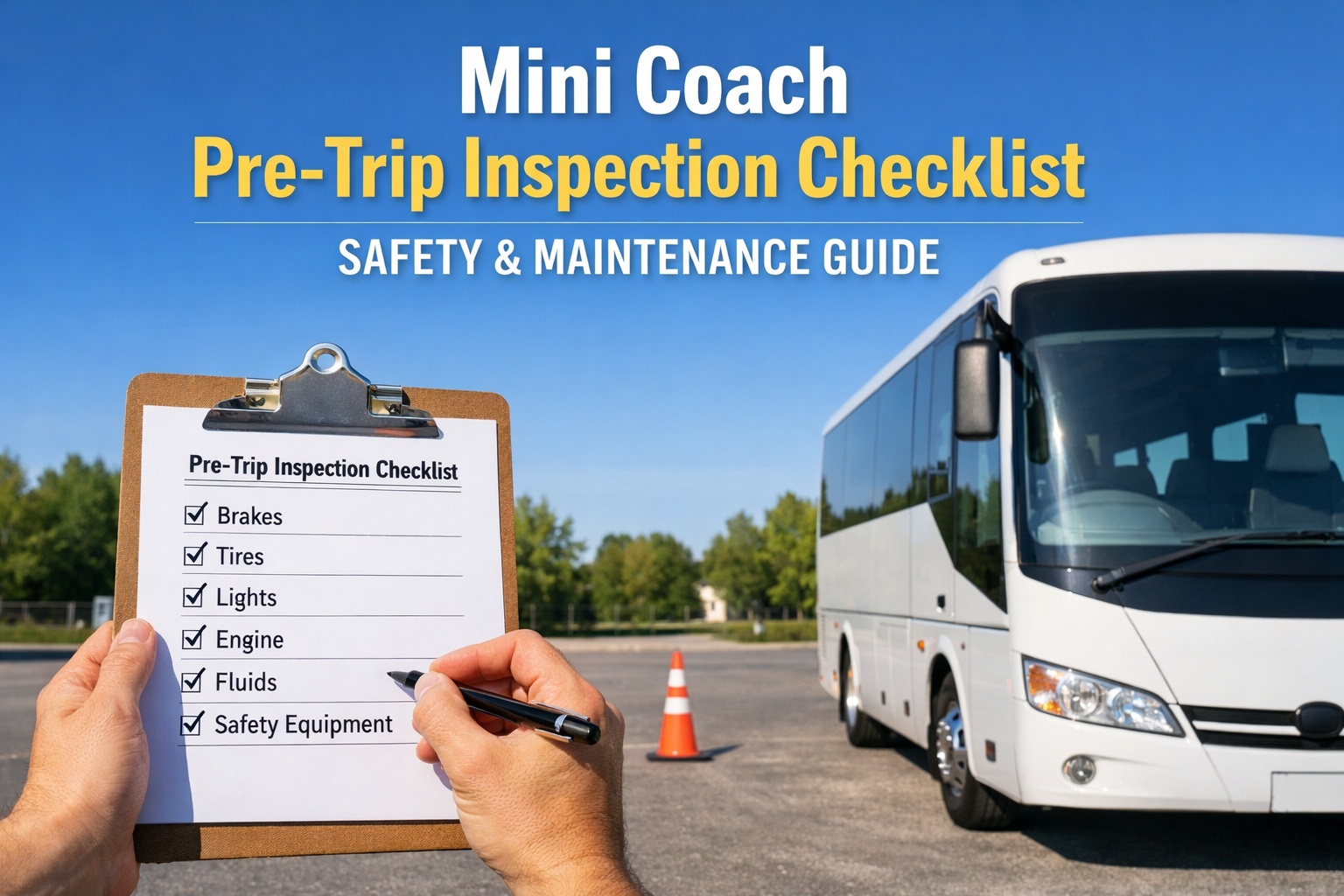
Download our FREE Coach Bus with Air Brakes Inspection Checklist covering 26 critical safety items. Digital tracking ensures daily compliance, prevents operation with defects, and maintains complete DOT records.
Ensure Passenger Safety with Systematic Air Brake Inspections
Complete coverage: air brakes, emergency equipment, lighting, safety systems—all verified with digital tracking for DOT compliance.