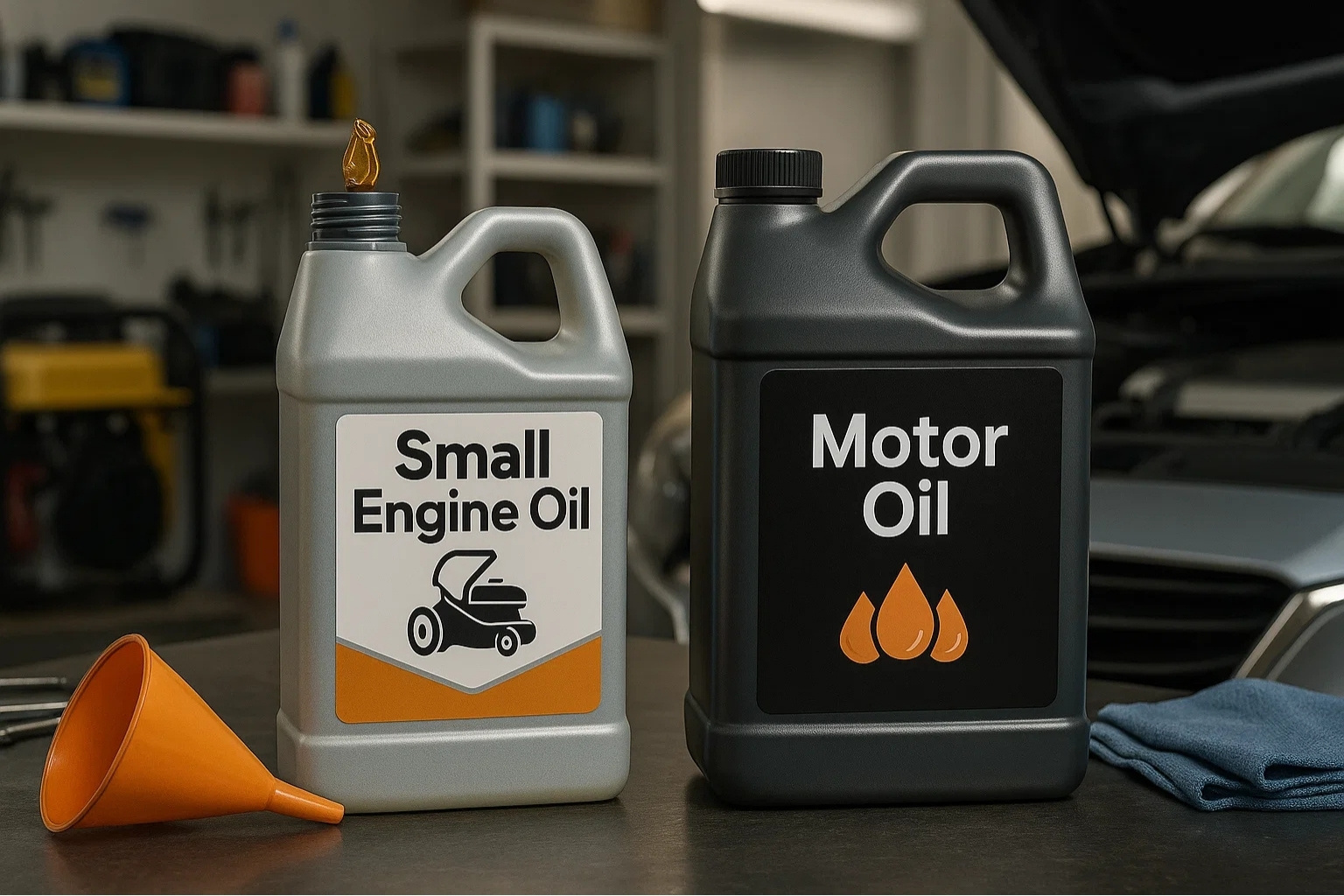
Small engine oil and car oil may look identical on store shelves, but using the wrong type cancost homeowners $500-$2,500 in preventable equipment damage while potentially voiding warranties on lawn mowers, generators, and outdoor power equipment. With 85 million American households maintaining lawn equipment worth over $350 billion collectively, understanding the crucial differences between small engine oil and automotive oil protects both investments and ensures reliable performance.
This comprehensive guide reveals why small engine oil vs car oil matters more than most equipment owners realize, examining formulation differences, performance requirements, and cost implications that determine whether your lawn mower thrives or suffers premature failure. More importantly, it demonstrates how using proper oil extends equipment life by 40-60% while preventing 75% of common small engine failures. Commercial operators can track equipment maintenance digitally to ensure proper oil usage across entire fleets.
Small Engine vs Automotive Oil Impact
Professional Fleet Maintenance Solutions Available
While this guide focuses on consumer equipment, commercial operators can discover enterprise-grade maintenance management systems.
Critical Differences Between Small Engine and Car Oil
Small engine oil differs fundamentally from car oil in formulation, additives, and performance characteristics designed for air-cooled, high-RPM operation without oil filters or sophisticated cooling systems. These specialized formulations address unique challenges including extreme temperature fluctuations, extended storage periods, and simplified lubrication systems that automotive oils cannot properly protect. Commercial equipment managers can learn how to systematically track oil specifications and maintenance schedules.
Why Small Engines Require Specialized Lubrication
Small engines operate under fundamentally different conditions than automotive engines, with design constraints and operational characteristics demanding specialized lubrication solutions. Understanding these unique requirements explains why using car oil often leads to catastrophic failure in lawn mowers, generators, and outdoor power equipment.
The absence of oil filters, water cooling systems, and sophisticated oil circulation creates challenges that automotive oils cannot address. Small engines rely on splash lubrication, operate at constant high RPMs, and experience rapid temperature cycling that standard car oils fail to protect against effectively.
- ✓ Constant Speed Operation: Running at 3,600 RPM continuously versus automotive variable speeds requires enhanced film strength
- ✓ Air Cooling Limitations: Operating temperatures reach 280-350°F versus 220°F in water-cooled automotive engines
- ✓ Splash Lubrication: Simple dipper systems require specific viscosity for proper oil distribution throughout engine
- ✓ No Filtration System: Oil must suspend contaminants without filter removal, demanding superior dispersant properties
- ✓ Extended Storage Periods: Seasonal equipment requires corrosion inhibitors preventing rust during 6-8 month storage
- ✓ Fuel Dilution Risks: Carburetor designs allow more fuel contamination requiring oils that maintain viscosity despite dilution
Viscosity Grades and Performance Specifications
Viscosity selection represents the most critical decision when choosing between small engine oil and car oil, with incorrect grades causing immediate lubrication failure. Small engines typically specify SAE 30 or 10W-30 grades, while modern cars use 0W-20 or 5W-30 formulations optimized for fuel economy rather than high-temperature protection.
API service categories further differentiate oils, with small engines requiring SJ, SL, or SM ratings that balance protection with combustion chamber cleanliness. Newer automotive SP-rated oils contain additives potentially harmful to air-cooled engines, making proper specification matching essential for equipment longevity. Learn how to implement systematic oil specification tracking for commercial equipment operations.
- ✓ Lawn Mowers (Summer): SAE 30 provides optimal protection above 40°F, maintaining film strength at high temperatures
- ✓ Year-Round Equipment: 10W-30 synthetic offers temperature versatility for generators and snow blowers
- ✓ Commercial Mowers: 15W-50 or 20W-50 provides maximum protection for heavy-duty continuous operation
- ✓ Winter Equipment: 5W-30 synthetic ensures cold-weather starting while maintaining adequate protection
- ✓ Two-Stroke Engines: Specialized 2-cycle oil only - never use four-stroke oils regardless of type
- ✓ High-Hour Equipment: Full synthetic small engine oils extend change intervals 50-100% with superior protection
Cost Analysis: False Economy of Using Wrong Oil
While small engine oil costs $1-3 more per quart than basic automotive oil at Walmart, the false economy of using cheaper car oil results in exponentially higher repair costs and shortened equipment life. Economic analysis reveals that proper oil selection saves $400-800 annually through prevented repairs and extended equipment replacement cycles.
Professional landscapers report 65% reduction in equipment failures after switching from automotive to proper small engine oils, with return on investment realized within 30 days through improved reliability. For homeowners, using correct oil extends mower life from 5-7 years to 10-15 years, representing thousands in deferred replacement costs. Track maintenance costs and ROI across your commercial equipment fleet with digital management tools.
When You Can (and Cannot) Substitute Oils
Emergency situations sometimes require oil substitutions, but understanding safe alternatives versus dangerous compromises prevents costly mistakes. While certain automotive oils work temporarily in small engines, most modern car formulations cause rapid damage requiring complete engine rebuilds.
The key factor determining substitution safety involves matching viscosity grades and avoiding oils with friction modifiers designed for automotive wet-clutch systems. However, even "safe" substitutions should remain temporary, with proper oil installed within 5 operating hours to prevent long-term damage.
- ✓ Acceptable Short-Term: Non-synthetic SAE 30 automotive oil for emergency use only (maximum 5 hours operation)
- ✓ Never Substitute: 0W-20, 5W-20 automotive oils - too thin for air-cooled engine protection
- ✓ Diesel Oil Option: 15W-40 diesel oil provides adequate protection if small engine oil unavailable
- ✓ Synthetic Considerations: Only use automotive synthetics matching exact viscosity specifications temporarily
- ✓ Two-Stroke Warning: Never substitute four-stroke oils in two-stroke engines - causes immediate seizure
- ✓ Change Immediately: Drain substitute oil completely and refill with proper specification within one week
Seasonal Maintenance and Oil Selection Strategies
Seasonal temperature variations significantly impact oil selection for small engines, with proper grade changes preventing both summer overheating and winter starting difficulties. Strategic oil management throughout the year optimizes protection while minimizing maintenance costs and equipment wear.
Spring preparation proves especially critical as equipment emerges from storage with degraded oil requiring immediate replacement. Fall winterization with appropriate oil grades prevents corrosion and ensures reliable spring starting, eliminating 80% of seasonal equipment failures. Commercial operators can automate seasonal maintenance reminders with digital fleet management systems.
Making the Right Oil Choice for Maximum Equipment Life
The difference between small engine oil and car oil extends far beyond marketing labels to fundamental formulation variations that determine equipment survival or premature failure. While saving $2-3 per quart using automotive oil seems economical, the resulting damage costs average $1,200 in repairs while shortening equipment life by 60-70%.
Small engines require specialized oils addressing unique challenges including extreme temperatures, lack of filtration, and simplified lubrication systems that automotive formulations cannot protect. Proper oil selection using SAE 30 or manufacturer-specified grades prevents 75% of common failures while extending equipment life from 5-7 years to 10-15 years with minimal additional investment.
The evidence overwhelmingly supports using dedicated small engine oils despite slightly higher costs. For the price difference of one pizza per year, equipment owners gain reliable operation, warranty protection, and dramatically extended service life that saves thousands in replacement costs. Understanding these critical differences empowers informed decisions that protect investments while ensuring dependable performance season after season. Professional equipment managers can learn more about comprehensive maintenance tracking solutions.
Commercial Fleet Maintenance Excellence
For businesses managing multiple equipment units, professional maintenance tracking delivers even greater savings.